


Manual Load Cartoner: Low Cost, High ROI
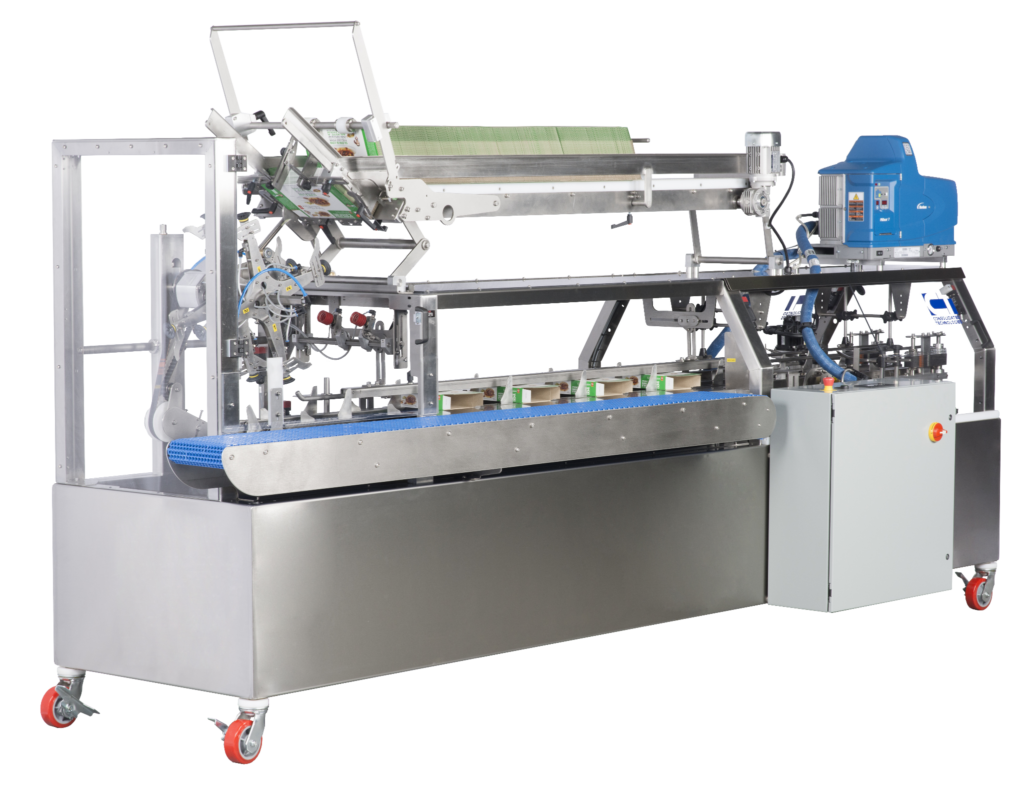
When it comes to cartoning solutions, not every operation requires full automation. For many manufacturers, especially those balancing product variability, labor availability, and throughput demands, manual load cartoners offer a highly effective middle ground.
These systems combine the consistency and precision of automated carton handling with the flexibility of manual product loading, making them a practical solution across a wide range of industries.
What is a Manual Load Cartoner?
A manual load cartoner automates the process of erecting, forming, and sealing cartons, while operators manually place products into each carton.
Machines like the HC-120 horizontal servo-driven cartoner are designed to handle the mechanical side of the process, including:
- Carton erection and pre-breaking
- Flap closing and glue application
- Carton transport and positioning
Meanwhile, operators load the product into cartons as they move through the system, allowing for flexibility across product types and formats.
Why Manual Load Cartoners Still Make Sense
In an era of full automation, manual load cartoners continue to play a critical role for a few key reasons:
1. Low Initial Investment, High Return on Investment
Compared to fully automated cartoning systems, manual load cartoners offer:
- Lower upfront cost with ROI payback in 1-2 years
- System can easily reduce head count on manual carton line by 2-3 people
- With two hand load stations, machine can easily achieve 80-85 cartons per min
2. Manageable Footprint and Caster Feet
- Approx 13 feet in length
- Systems can be on lockable casters so you can move from line to line
- Scalable load stations for a smaller or larger system
3. Flexibility Across Product Types
Manual loading allows operators to handle difficult or large cartons:
- Irregularly shaped, Fragile or delicate
- Deeper cartoner available to run up to 16” depth
- Indexing mode can be used for very difficult product, stops systems and indexes with a push of a button
4. Scalable Throughput
With configurations capable of running up to 120 cartons per minute, output can be adjusted based on:
- Number of hand loading stations
- Optional Infeed conveyor, cartoner magazine
- Incline system at 10 degrees available for tricky product
This flexibility allows operations to scale production without fully committing to robotic loading.
Key Features That Drive Performance
Modern manual load cartoners are far more advanced than their predecessors. Systems like the HC-120 incorporate:
Servo-Driven Precision
A servo-driven main system ensures:
- Smooth acceleration and deceleration
- Accurate carton positioning
- Consistent, repeatable performance
This level of control improves overall line efficiency and reduces errors.
Intelligent Controls and Diagnostics
Touchscreen HMI and PLC integration allow for:
- Quick setup and changeovers
- Saved “recipe” settings for different products
- Real-time diagnostics and monitoring
This reduces downtime and simplifies operation for line personnel.
Built-In Detection and Safety
Integrated systems help prevent issues before they impact production:
- Product jam detection
- Carton jam detection
- Sensor failure alerts
- Full safety interlocks
These features help maintain uptime while protecting both equipment and operators.
Durable, Hygienic Construction
Built with stainless steel and anodized aluminum, these machines are well-suited for:
- Food production environments
- Pharmaceutical applications
- Washdown and sanitation requirements
Ready to explore manual load cartoning for your operation?
Speak with a SEPKG equipment specialist to evaluate the right solution for your line.
👉 Find your regional rep: https://www.sepkg.com/locator/
See It in Action
For a closer look at how manual load cartoners operate in real production environments, check out the videos below: