


4 Effective Methods for Fill Level Inspection in Bottles, Jars, and Cans
Accurate fill level inspection is critical for manufacturers across food, beverage, pharmaceutical, and personal care industries. Whether you’re filling bottles, jars, or cans, maintaining consistent fill levels directly impacts product quality, regulatory compliance, and overall profitability.
Underfilling can lead to compliance issues and customer dissatisfaction, while overfilling results in costly product giveaway. The right inspection technology helps strike the perfect balance.
Below are four of the most effective methods for automated fill level inspection, along with their advantages, limitations, and ideal use cases.
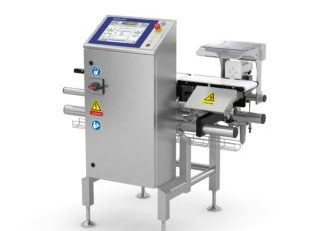
1. Checkweighers (Weight-Based Inspection)
Checkweighers are one of the most widely used solutions for fill level verification. These systems measure the weight of each container as it moves along the production line, rejecting any that fall outside of a predefined range.
Because weight often correlates directly with fill volume, this method works especially well for liquid and semi-solid products.
Advantages
- Highly accurate and repeatable measurements
- Works across a wide range of container types
- Provides valuable production data and trends
- Proven and reliable technology
Considerations
- Measures weight, not actual fill level
- Requires product transfer onto and off the system
- May require additional spacing between products
Best For
Beverages, sauces, pharmaceuticals, and other consistent products where density remains stable.
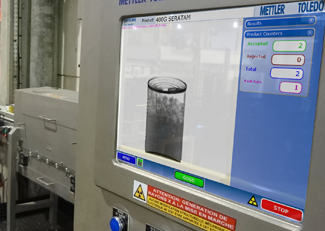
2. X-Ray Inspection Systems (Fill Level + Foreign Material Detection)
X-ray inspection systems offer a powerful dual-purpose solution: detecting foreign materials while also verifying fill levels.
These systems work by measuring how much X-ray energy passes through a product. Variations in absorption indicate differences in fill level, allowing detection of both overfilled and underfilled containers.
There are two primary approaches:
- Full inspection systems that evaluate the entire package
- Targeted systems that focus specifically on the fill level area
Advantages
- Can inspect through metal, glass, and plastic containers
- Detects both fill level and foreign contaminants
- Handles product movement (sloshing) better than point sensors
- Often installs over existing lines without major modifications
Considerations
- Higher upfront investment, especially for full inspection systems
Best For
Canned goods, pharmaceuticals, and high-value products where precision and safety are critical.
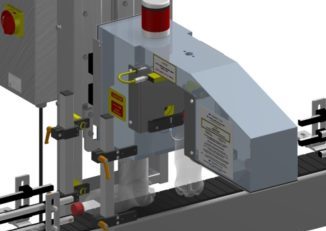
3. X-Ray Fill Level Sensors (Compact Systems)
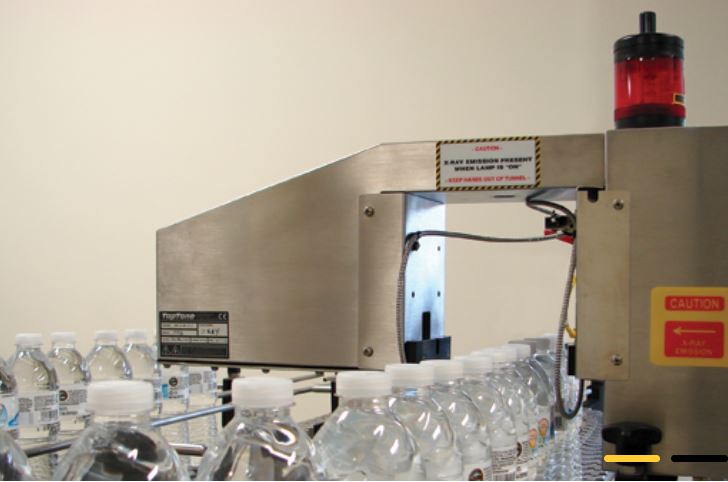
Compact X-ray fill level sensors, like those used in specialized inspection setups, focus specifically on measuring fill height rather than scanning the entire product.
These systems use a narrow beam across the fill line to detect inconsistencies quickly and efficiently.
Advantages
- Smaller footprint compared to full X-ray systems
- Fast and reliable fill level detection
- Minimal line disruption
Considerations
- Focused on fill level only, not full product inspection
- Still requires radiation safety considerations
Best For
High-speed production lines where space is limited and fill consistency is critical.
IR Fill Level Sensors
Infrared sensors measure fill levels by passing light through a container and detecting where the liquid level interrupts that beam.
This method is commonly used in applications with clear or semi-transparent containers.
Advantages
- Non-invasive and fast
- Simple and cost-effective
- Ideal for high-speed lines
Considerations
- Limited to transparent or semi-transparent packaging
- Can be affected by product color and opacity
Best For
Clear bottles containing beverages, chemicals, or similar products.
5. Vision Inspection Systems
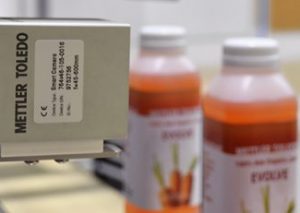
Vision systems use cameras and software to visually analyze fill levels, often by identifying contrast between the liquid and the container.
These systems are particularly effective when inspecting clear bottles with darker liquids.
Advantages
- High-speed, real-time inspection
- Extremely flexible and configurable
- Can inspect additional features like cap placement and labeling
Considerations
- Requires consistent lighting and contrast
- May need calibration for different product types
Best For
Clear containers with dark liquids, such as juices, sauces, or soft drinks.
Choosing the Right Fill Level Inspection Method
There is no one-size-fits-all solution.
The right technology depends on:
- Container type (glass, plastic, metal)
- Product characteristics (liquid, viscosity, opacity)
- Production speed
- Regulatory requirements
- Budget and line configuration
Many facilities also combine multiple technologies, such as using a checkweigher alongside an X-ray system, to maximize accuracy and protection.
Final Thoughts
Fill level inspection is more than just a quality control step, it’s a critical component of operational efficiency and brand protection.
By implementing the right inspection system, manufacturers can:
- Reduce product giveaway
- Minimize false rejects
- Improve compliance
- Increase overall line efficiency
If you’re evaluating your current inspection setup or exploring new solutions, it may be worth taking a closer look at how your fill level inspection process is performing.
Looking to Improve Your Inspection Process?
SEPKG works with manufacturers across multiple industries to identify the right inspection and automation solutions based on real-world production needs.
Request a line evaluation or connect with a regional specialist to explore options tailored to your operation.